

14 Oct How to Stage an Intervention for an Addicted Loved One?
Quick Answer: The key elements to staging an intervention include careful preparation, supportive people, choosing the right time and place, offering specific concerns without blame, establishing boundaries, and having treatment options available. Additionally, an expert interventionist can guide the ongoing family discussion securely and can also obtain support to get assistance for their family member.
Dealing with an addiction that has spread to the whole family, it can feel like the entire situation is out of hand and there’s no way to go. When addiction has affected the whole family, sometimes learning how to host an intervention for the addicted loved one is overwhelming.
An intervention is not done for embarrassment, for shame, or to force a person to go into recovery. It is a “set-up” conversation in which a message of concern and understanding and a call for treatment is taken to the person and the family about the effects of substance use on the person and family.
Families can approach this challenging conversation with increased confidence with the right preparation, compassion, stating their boundaries, and having professional assistance if necessary.
Key Takeaways
Intervention is a chance to enlist all members of the family and other important people within the circle to have an organized chance to confront the addiction and demand treatment. The goal is to try and convey the concern in a non-threatening and clear way, without confronting the person, using insults, or shaming the person. It is easy for events that do evoke emotional conversation to quickly escalate, and it is crucial to plan ahead.
Here are a few things to consider:
- Think about what to say ahead of the confrontation.
- Select participants who are truly involved in recovery.
- Do not use any accusations; use specific examples.
- Have a plan for treatment in advance of intervention.
- Set limits and consequences that are reasonable.
- Look for intervention by a professional.
- Focus on the physical and emotional needs of all.
Engaging the family can be a critical component in making mental health and substance use treatment a reality.
What Is an Intervention?
An intervention is a well-planned discussion of a loved one’s substance use or related behavior, with the involvement of other people that matter to them, such as family members, friends or trusted others. Participants share their observations, their impact and why they think they need professional support. The dialogue should be one of concern and treatment, rather than punishment.
Somebody won’t automatically accept help just because of intervention. It’s better thought of as an opening to the door of treatment. Families must make sure that they have determined the treatment options and transportation before the meeting, and what they will do if the person refuses help and what their financial situation will be like.
Understanding Addiction and the Need for Intervention
Addiction alters behaviour, relationships, priorities, decision making. A person with a problem might downplay it, realize they need help but not commit to the treatment, or make the changes themselves. Families may feel helpless, frustrated, or frightened by these reactions.
Learning the ropes on staging an intervention for an addicted loved one begins with understanding that drug addictions are treatable. Depending on the individual’s needs, treatment may consist of behavioral therapies, medications, counseling, family involvement or a combination therapy intervention. Family and friends have the potential to be an essential part of the motivation to get into and stay in treatment, according to NIDA.
Take Our Substance Abuse Self-Assessment
An addiction evaluation online could allow somebody to reflect on their alcohol or medicine usage patterns, the results, and cravings, as well as challenges managing their use. It doesn’t actually solve the problem, but it can serve as a beginning in figuring out that something else is going on and help is necessary.
Families can also take screening information to help be ready to talk with a health provider or addiction specialist. Even if a person may have some concerns about the use of a substance, the treatment does not need to be delayed because of those concerns. Screening, brief intervention, and referral to treatment are a set of practices that can link people to treatment, according to SAMHSA.
Steps Involved in an Intervention
Preparation is one of the most crucial steps in learning how to do an intervention for a loved one who is addicted or has a substance abuse problem. Keep the number of people the individual confides in to a small number. Select everyone’s role and document concrete examples of the effects of drug use on relationships, work, money, and health/daily life for each person.
Then pick a suitable time (one when they might be sober and able to talk to you) when you can approach them again, in a private setting. Prior to starting the meeting, have a plan for treatment. This can involve detox, residential treatment, outpatient treatment, therapy, or some other form of treatment that is warranted.
Things to Avoid at an Intervention
However, counterproductive interventions can result if participants take an adversarial stance against the intervention. Try not to raise your voice, shout, threaten (but not do), jump to grandiose statements, refer to other family issues, or ask the question of whether they are “truly” addicted.
Avoid making promises you can’t keep. Do not try to coerce someone into treatment, unless this person is in immediate danger and in need of immediate professional intervention. The goal is to express worry and set boundaries, not to win the argument. When there is a history of violence, severe psychiatric symptoms, suicidal behavior, or other serious safety issues, consult a professional for advice before making a plan for an intervention.
Different Types of Interventions
Not every family can be reached with one kind of intervention; there is diversity in the ways in which we can reach them. Traditional intervention results in a group of people meeting with the person(s) at a scheduled time. A different strategy could be an ongoing series of discussions instead of one formal meeting. Depending on the person’s circumstances and the family’s needs, a professional may recommend a method.
The same type of basic principles can be utilized when somebody searches for how to stage an intervention for an alcoholic or a drug addict, as well as for mental health issues. But substance use and mental health problems need to be addressed on an individual basis. Only a qualified professional can decide what type of conversation is appropriate.
Recovery Requires Social Support
Most of the time, recovery will occur alongside other parts of the process of transition to recovery. Family members, friends, peer groups, therapists, healthcare professionals, and other supportive individuals can play a role in creating a supportive recovery environment. Support does not imply being the person who is responsible for another’s recovery or bailing them out of the consequences of drug use.
In order for someone to support you in a healthy way, they also have to have boundaries. One example of this is when a family member refuses to give money for drugs or makes excuses for not going to work or if they let unsafe practices occur in the house. SAMHSA still makes it a point to highlight that family support can play a key role in the lives of individuals who suffer from mental or substance use disorders, while also emphasizing the importance of seeking support for the family too.
If your family is thinking about an intervention, Intervention 911 can teach you what to do next and whether you need intervention support from a professional. If the individual is given guidance in advance of the conversation, it can make the conversation safer, more compassionate and organized.
Do Interventions Really Work?
Interventions can help someone think about seeking help, but this doesn’t promise that the individual will do so right away. Addiction is multifaceted and can vary from person to person when it comes to the time people feel like attending treatment facilities. One conversation should not be considered to be the one-place, one-time fix.
Part of the power of an intervention can lie in establishing an obvious supportive course of action for getting into treatment. Families can educate themselves, bring up issues, and set boundaries as well as not enable destructive behaviors. SAMHSA suggests that instead of using one approach for all individuals, individuals are linked to appropriate treatment and recovery services.
Can a Professional Interventionist Be Helpful?
A professional interventionist will be able to help the family prepare for any potentially difficult conversations, help define the circles of people that will want to speak, build an intervention that is controlled, and help the family anticipate what could come up. This is particularly helpful if family relationships are tough or if talks around treatment have failed up to now.
Experts can also offer advice on what pitfalls to steer clear of, including engaging in conflicts, promising things they don’t intend to do, or going to the person when he or she is drunk. An interventionist can’t control whether or not someone becomes treated. Rather, the professional can aid in the establishment of a process that is structured and directed to safety, communication, and proper support.
How to Find a Professional Interventionist
When selecting an interventionist, be sure to find out about someone’s professional experience, training, approach, costs, availability, and his or her dealings with safety issues. Inquire if they get a say in who they use for services and if they can assist the family with coming up with a plan if the person doesn’t engage in treatment.
It’s also crucial to have awareness of the follow-on steps or activities. A good plan should take into account the immediate treatment options, how it will be transported, family boundaries, what will be given to the family in the event that the person changes their mind later and what follow-up should be done. Additionally, families can find out about the treatment resources provided by SAMHSA to learn more about the treatment programs and what resources are available.
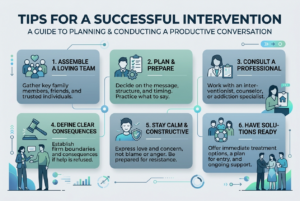
Tips for a Successful Intervention
If you are looking up how to do an intervention, think of preparing, but not trying to generate the perfect talk. Using brief, specific, and honest statements. Describe what you observed, and the impact you noticed the observations have had on you. Don’t use labels; deal with behaviors and consequences.
Helpful strategies include:
- Prepare your speech in writing.
- Make statements instead of accusations using “I” statements.
- Limit the size and level of encouragement for the participant group.
- Define limits before meeting.
- Ensure treatment plans are in place.
- If he or she becomes defensive, stay calm.
- Don’t recap or require participants to recall specifics or collective memory.
- Be aware of when it is time to stop talking.
- When the situation isn’t safe, get help from a professional.
Most importantly, keep in mind that you do not have to put yourself in danger for a person with addiction; you have to be okay first.
Get Connected to a Professional Addiction Treatment Center
Part of an intervention is to know how to stage it for an addicted loved one, but that isn’t all. Next will be the process of linking individuals to suitable care. This can involve medical assessment, detoxification, inpatient services, outpatient services, behavioral therapy, medications if necessary and ongoing support in maintaining recovery.
Having a plan in place can also help avoid any delays in treatment if your loved one is on board with getting help. The family can still proceed in establishing healthy boundaries, seeking counseling or family support, and having treatment resources on hand if they do not accept. SAMHSA offers a confidential national drug and alcohol treatment referral service (1-800-662-HELP (4357)) and a treatment locator on the Internet.
Intervention 911 is here to support families on their next step. However, if a problem has arisen because of an addiction that has taken hold in someone you love, and you aren’t sure how to proceed, call for help in planning an intervention and reviewing treatment options. Remember, you are not in it alone.
Sorry, the comment form is closed at this time.