Mental Health Diagnosis

When these changes in mood, behavior, thinking, and functioning noticeably start to affect a person’s life, a professional assessment can help to see where things are at and whether or not some degree of support is needed. Intervention 911 assists families in Palm Springs in working through mental health issues, professional evaluation, intervention plan, and treatment placement and follow-up.

Call Intervention 911 (866) 888-4911 if you have any concerns about a loved one for confidential information on what to do next.

What is a Mental Health Diagnosis?

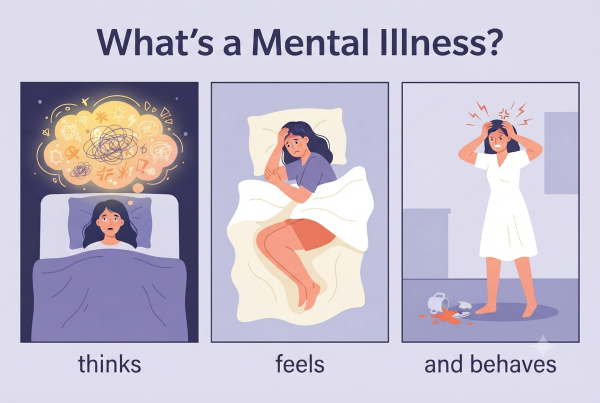
Any mental health diagnosis is a clinical decision by a trained mental health specialist who has taken into account various factors, including symptoms, history, conduct, functioning, and other factors. This may impact a person’s feelings, thoughts, actions, relationships, work or school performance, or personal functioning in daily tasks.

No, importantly, a diagnosis does not follow from a simple consideration of the symptoms. Some common conditions may present with similar signs and symptoms, or there may be other factors, such as substance use, medications, or medical, traumatic, or other conditions, which may render the accurate assessment more complex. Intervention 911 understands this and facilitates the individual with proper professional treatment if additional assessment and treatment are required.

Why Is a Mental Health Diagnosis Necessary?

Knowing what might be happening can assist families in making educated decisions on care. Proper evaluation may lead to a determination that someone needs treatment, psychiatric treatment, or treatment for alcohol and/or drug abuse or addiction, more intensive treatment, or a combination of treatments.

Diagnosis in Palm Springs near me shouldn’t only occur for a family to obtain something that indicates that someone has a mental problem. The goal is to learn more about what this person needs and what should be done for them and when.

Signs and Symptoms That May Require Professional Evaluation

Mental health disorders can manifest in different ways for each individual. Any change that has a long time frame or interferes with functioning should be a matter of professional concern.

Some of these signs are

  • Major or lasting shifts in mood
  • Increasing isolation or withdrawal
  • Having trouble paying attention or making decisions
  • Abrupt shifts in sleep or appetite patterns.
  • Rising to annoy or agitate or cause emotional distress
  • Poor performance at work or in school
  • Trouble keeping relationships or being responsible
  • Neglecting personal care
  • Dizziness, strange actions, or lack of normal thinking.
  • More drinking/drug use to cope
  • Ideations of self-destructiveness or suicidal ideas.

These symptoms don’t necessarily point to a particular disease or illness. An experienced worker must fill the rest of the picture in order to decide on the correct care.

Signs and Symptoms That May Require Professional Evaluation

What to Expect From Our Mental Health Diagnosis Support

A family face-to-face with the uncertain situation will get help from Intervention 911 to find a care plan that is right for them. Its mental health services for interventions are geared toward those who have a mental health disorder, don’t understand they need help, or who do not agree to treatment.

Some of the steps of a typical process are:

  • Confidential consultation: Family members share their observations and concerns.
  • Assessment and information gathering: Appropriate symptoms, history, substance use, safety issues, and current situation are taken into account.
  • Professional advice: The team can advise if further clinical review and/or intervention might be necessary.
  • Intervention planning: If required, an interventionist is trained in conducting a structured conversation with the family.
  • Treatment connection: The individual can be referred to a level of care and/or treatment provider.
  • Prevention ongoing: When initial support is provided, there may be a need for families to navigate treatment and recovery.

This is part of the overall model of intervention, case management, treatment placement, and continuing care at Intervention 911.

Our Mental Health Diagnosis Services

The intervention professionals at 911 are there to handle complicated mental health issues, not just an isolated mental health issue.

Mental Health Intervention

Neither solely medical nor social, psychiatric, or behavioral concerns are “refused or avoided.” When families experience significant concerns at this level, a professionally facilitated intervention enables the family to effectively share the concerns in a safe and constructive way. The overlap of symptoms of mental health disorders and potentially complex family situations is a reason for trained professional facilitation in Intervention 911.

Mental Health Assessment and Treatment Placement

Appropriately qualified clinician to do mental health diagnosis assessment. Intervention 911 may be able to assist families in determining if additional evaluation is necessary and help to arrange the next step with the proper treatment resources.

Dual Diagnosis Intervention

Depression symptoms and drug use often go hand-in-hand. An intervention 911 helps with a dual diagnosis intervention because substance use can make it difficult to see symptoms, and not treating mental health issues can affect recovery.

Family and Case Management Support

Before, during, and after the intervention, families often need concrete information. The training, case management concepts, treatment placement, and continuing care planning and services of Intervention 911 include family support for complex mental health and behavioral issues.

Types of Mental Health Diagnosis

There are numerous mental health disorders, and they may have similar symptoms. Examples include:

Based upon the person’s symptoms, history, functioning, and circumstances, the appropriate evaluation is to be given. Families should not try to diagnose a disorder/condition from an Internet checklist; seek guidance and evaluation from a professional if symptoms are persistent or worsening or if they are interfering with safety and daily life.

Benefits of Addressing Mental Health Concerns Early

Early help, and ensuring that you get the right kind of help, can make it easier to understand what is going on and put the child in touch with the most appropriate care. Early intervention can also assist families to respond before significant issues escalate to a crisis or to become more disruptive.

Potential benefits include:

  • Better understanding of their needs
  • Appropriate treatment pathway
  • Having been in contact with competent people prior
  • Improved integration of mental health and substance use services
  • Reduced family conflict and uncertainty
  • A written plan to follow for decisions about continuing care.

Mental health treatment for dual diagnosis may be particularly important for those who have mental health disorders along with addictions, as only addressing one disorder can fail to resolve both. Integrated care is often spoken and expressed of for co-occurring health conditions.

Our Approach to Mental Health Intervention

All Intervention 911 is structured and individualized. Staff are intervention specialists as well as licensed professionals who have experience in addiction, mental health, case management, and family systems.

The mental health diagnosis intervention cycle should be thought of as a continuous cycle and not a singular dialogue. Identifying signs or symptoms can be important, as can clinical evaluation, development of an interventional plan (when needed), referral to treatment, and then follow-up.

We also understand that mental health concerns and solutions are not only for the individual but also dependent on the environment. Other factors that may affect the next step will be family relationships, substance abuse or dependency, employment, shelter, security, and readiness for treatment or services.

Approach to Mental Health Intervention

Why Choose Intervention 911?

Since 2002, Intervention 911 has been delivering intervention services out of its office at 1900 Tahquitz Canyon Way, Suite B1 in Palm Springs. The organization provides mental health and/or dual diagnosis intervention services and collaborates with families across the country.

The staff has qualifications in intervention, counselling, family therapy, addiction treatment, and case management.

Proximity is often a good choice for Palm Springs families because it may also encourage them to start their anonymous discussion with greater ease while still able to coordinate with the team for appropriate treatment resources when necessary.

Get Help With Mental Health Concerns Today

If a loved one has been coming on or going off about mood, behavior, or thinking or things they are using, and you’re not sure what to do, don’t assess that one yourself. Talk with Intervention 911 (866) 888-4911 confidentially about your situation and whether an assessment, intervention, treatment referral, and/or higher level of support is right for you.

Frequently Asked Questions

1. What is a mental health diagnosis?

A mental health diagnosis is a clinical determination made by a qualified professional after evaluating symptoms, history, behavior, functioning, and other relevant factors. It helps guide decisions about appropriate treatment and support.

2. How do I find a mental health diagnosis near me in Palm Springs?

Start by contacting a qualified mental health professional or an organization that can help coordinate an appropriate assessment. Intervention 911 can help families understand their options and determine whether intervention or treatment placement may be appropriate.

3. How does a mental health assessment work?

An assessment may involve questions about symptoms, personal and medical history, substance use, relationships, behavior, and daily functioning. A qualified clinician uses this information to determine whether further evaluation or treatment is needed.

4. Can mental health and substance use problems be treated together?

Yes. When mental health and substance use concerns occur together, an integrated approach may be appropriate. Intervention 911 provides dual-diagnosis interventions that address both concerns as part of the intervention and treatment-planning process.

5. What should I do if my loved one refuses mental health treatment?

Avoid trying to force or diagnose the person yourself. A trained intervention professional can help the family understand the situation, prepare a structured intervention, and identify appropriate treatment resources. Intervention 911 specifically recommends professional facilitation for complex mental health interventions.

0
0
Your Cart
Your cart is emptyReturn to Shop