

28 Sep What is Interventional Pain Management? Procedures, Benefits & Risks
When looking for interventional pain management, you probably are not seeking pain relief with a pill. Interventional pain management is a technique that involves a minimally invasive procedure that can help identify or minimize pain in targeted areas of the body. The following procedures can be performed in conjunction with physical rehabilitation, lifestyle modifications, medication and other pain treatment methods. The purpose of this is not to hide the pain but to enhance comfort and function in the activities of daily living if appropriate.
Key Takeaways
- Interventional pain management is what? It is a special technique applied to specific procedures that result in diagnosis or treatment of specific types of pain.
- Common treatment techniques include nerve blocks, epidural injection, joint injection, radiofrequency ablation, and spinal cord stimulation.
- It could provide some relief for those suffering from back, neck, nerve, joint or chronic pain.
- Interventional procedures are relatively non-invasive and do not necessarily involve surgery.
- This is dependent on the procedure as well as the underlying condition and individual response.
- It is important to have a qualified healthcare professional decide if an intervention is necessary.
Anyone experiencing chronic pain and a history of substance abuse should talk candidly with their health care professional regarding any medications and/or treatment options.
What is Interventional Pain Management?
So, what does interventional pain management mean in layman’s terms? It’s a method of pain relief that involves an examination or treatment procedure that is specifically aimed at the pain. A specialist might not just use medications but also may place the medications close to a painful joint, nerve, or structure or use a technique that disrupts pain signals.
According to the American Society of Interventional Pain Physicians, interventional pain management is a specialty of medicine that treats pain disorders by using interventional techniques as a stand-alone or adjunctive treatment.
It is important to understand that when it comes to deciding what interventional pain management is, it is not a single procedure. A general term for techniques that are chosen in relation to the likely source and nature of the pain.
For instance, a person who has pain in his/her leg from the nerves will get a different procedure than the one who has pain in his/her leg from the joint. Medical history, symptoms, physical exam, past treatment, and sometimes imaging are all taken into account during the evaluation.
How Does Interventional Pain Management Work?
To know what interventional pain management is, it’s necessary to know how these procedures work to target pain.
The process generally begins with an evaluation. A health care professional determines the cause of the pain and if an intervention is likely to help.
The process may:
- Give medicines near an irritated nerve or joint
- Temporarily block pain signals
- Provide some guidance to help determine a source of pain.
- Decrease swelling around an irritated area.
- Interrupt pain-carrying nerves
- Offer extended pain relief using some of the most advanced techniques
- Many procedures are performed with the assistance of imaging guidance (fluoroscopy or ultrasound) to ensure a needle’s placement is as precise as possible.
Interventional pain management is typically not a standalone treatment, but rather an element of a comprehensive treatment plan. Depending on the patient, evidence-based pain care can involve a combination of medications, physical interventions, behavioral methods, rehabilitation, and interventional therapies.
What Conditions Can Interventional Pain Management Help?
Having answered the question of what interventional pain management is, the next question is, which conditions might benefit?
If any of the following types of interventions are considered, a consultation with the interventional cardiologist is recommended:
- Chronic low back pain
- Neck pain
- Sciatica or radicular pain?
- Spinal stenosis
- Joint pain
- Facet joint pain
- Sacroiliac joint pain
- Some nerve pain ailments
- Long-term pain following surgery.
- Pain due to some cancer conditions
Not all of those who have these conditions will improve from an intervention. The cause of the pain is important. A technique to relieve one form of pain may not relieve another.
For instance, epidural injections, facet interventions, nerve blocks, radiofrequency interventions, and spinal cord stimulation have been studied for various types of pain and are recommended in clinical guidelines. Evidence is different for each procedure and diagnosis.
Common Types of Interventional Pain Management Procedures
So a big piece of knowing what interventional pain management is involves knowing what procedures may be included in interventional pain management.
Nerve Blocks
A nerve block is the injection of a drug close to a nerve or nerves. May temporarily relieve pain and can sometimes be used to help identify which nerve is causing the pain.
Epidural Steroid Injections
An epidural injection is an injection that is delivered into the space around the spinal nerves. These injections can be used for some forms of back pain that radiates out or is caused by nerve problems.
Facet Joint Injections
Facet joints are small joints found in the spine. When it’s suspected that these joints are causing back or neck pain, injections can be used.
Radiofrequency Ablation
Radiofrequency ablation is a thermal procedure in which the heat is controlled to interrupt only specific nerves responsible for pain. May be used for some chronic pain from joint or spinal problems.
Sacroiliac Joint Injections
The sacroiliac, or SI, joints are where the lower spine meets the pelvis. If these joints are suspected to be the source of pain, an injection can be an option.
Spinal Cord Stimulation
Spinal cord stimulation is a device that delivers electrical stimulation to change the way pain is communicated. May be considered for selected individuals who have chronic pain which has not sufficiently responded to other interventions.
Depending on diagnosis, medical history, previous care and individual goals, the proper procedure will be used.
Who Is a Candidate for Interventional Pain Management?
- A person who inquires about interventional pain management may be wondering if they are a good candidate.
- The checklist is not one-size-fits-all. Consider an intervention when:
- Appropriate conservative treatment has not provided adequate pain relief.
- A specific pain source can be reasonably determined.
- Symptoms impair functioning in everyday life, work, movement or sleep.
- The risks are minimal compared to the benefits expected.
- There is no medical indication that the procedure will be dangerous for the person.
An intervention should be based on an individualized evaluation. It is important to remember that there are no definitive rules for recommendations, as pain conditions and individual needs vary.
A Note About Chronic Pain and Substance Use
Substance use and chronic pain can sometimes go hand-in-hand. Those who are in chronic pain may also be worried about addiction, drug misuse or past substance abuse issues.
This does not mean interventional procedures are indicated for all patients; however, the need to communicate openly is that much more crucial. Let your health care provider know about any medications you are taking, past drug or alcohol use and any concerns about medication dependence. A customized, individualized plan can assist in balancing pain relief, function, safety, and long-term goals.
Intervention 911 may be able to help you learn about the options for intervention and support if your or your family’s life is impacted by chronic pain or substance use. Contact us today to have your questions answered and begin your journey towards receiving the professional help that you need.
What to Expect During an Interventional Pain Management Procedure
- A guide to what patients can expect when undergoing interventional pain management.
- A guide to what patients can expect when undergoing interventional pain management.
- The experience varies from procedure to procedure, but the process is usually a few simple steps.
First, the provider will check your medical history, your symptoms and medications, your allergies, and past treatments. A physical exam or imaging review may be done as well.
The provider will tell you what the procedure will involve and discuss the risks and benefits with you before the procedure. There are specific preparations that may be necessary for some procedures, including adjusting some medications.
In the process, the area is cleaned and numbed. A needle or other device is then gently inserted, usually with imaging assistance. The process could take a few quick minutes, but preparation and recovery can add to the total time.
Following this, you might be given information on activity, medication, and warning signs. Some procedures may cause temporary soreness or discomfort.
Benefits of Interventional Pain Management
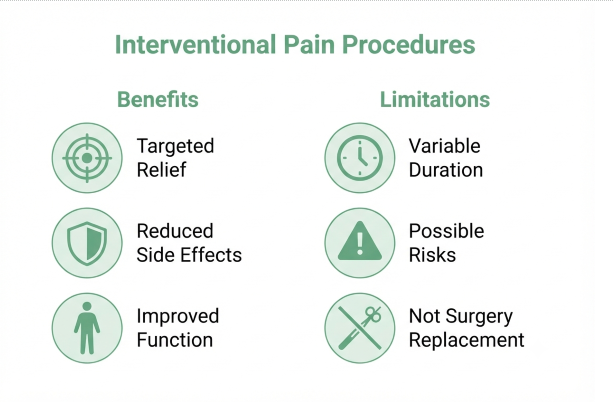
There’s one reason individuals do seek out what is interventional pain management: because they have the opportunity of targeted pain relief.
These benefits could be:
- Targeting a suspected pain source
- Reducing pain intensity
- Supporting improved movement
- Helping some people to be more comfortable in rehabilitation
- In selected cases, the diagnostic information would be provided.
- For some people, decreasing the use of some medicines.
- Providing a choice in suitable circumstances rather than surgery
But there are no guarantees of benefits. Some procedures will relieve for a short time; others will be more permanent. There are also significant differences in evidence between procedures and conditions.
The end goal should be meaningful improvement in function and quality of life, not just the quick fix of a pain score change.
Risks and Potential Side Effects
Recognizing interventional pain management also means recognizing that there are risks to procedures.
Risks of side effects depend on the intervention and include:
- Temporary soreness
- Bruising
- Bleeding
- Infection
- Numbness or weakness, lasting temporarily.
- Temporary numbness or weakness.
- Headache following some injections
- Medication-related side effects
- Serious complications are rare but may involve nerve or tissue injury.
There are other risks with some procedures. For instance, there are factors that are not relevant to a simple injection that must be considered with an implanted device.
Your doctor should tell you what kinds of risks are particular to your procedure. Beware that a minimally invasive procedure is not a risk-free procedure.
When Should You Consider Interventional Pain Management?
Still not sure what interventional pain management is? Just consider it one piece of a larger pain-care puzzle.
If in pain, speak to a qualified healthcare professional about it,
- Can last for weeks or months
- Disturbs or disrupts activities
- Restricts activity or sports
- Affects sleep
- Prolongs a course of treatment for an appropriate conservative therapy.
- Continues treatment when conservative therapy is appropriate.
- Passes over a nerve track
- Has been associated with a particular joint, nerve, or spinal structure.
It is also important to get medical help for new or worsening pain, particularly if they experience any of the following symptoms: a lot of weakness, loss of bladder and bowel control, fever, losing weight, or other worrisome changes.
No one answer exists, and each person and type of pain requires a different approach for interventional pain management. The only way to know if an intervention seems to be appropriate is to do a proper evaluation.
If symptoms of pain, substance use, or family issues are becoming problematic, don’t wait for a crisis. Intervention 911 offers families professional intervention assistance for substance abuse and addiction. Call Intervention911 and discuss your situation with them and what you think you can do.

Final Thoughts
So, what is interventional pain management? A focused, careful strategy to diagnose or treat some kinds of pain using the least invasive methods. This can involve injections, nerve blocks, radiofrequency procedures and other procedures depending on the cause of the pain.
Interventional pain management is not a panacea and is not suitable for everyone. Treatment will vary depending on the nature of the pain, health history and previous treatments, risks and your expectations.
If you have substance abuse or addiction issues, discuss your pain management choices with a qualified professional in an open forum. When it comes to pain or substance use issues, it may take coordinated support instead of a single solution to address these issues safely.
Looking for help with an addiction-related issue?
Call on Intervention 911 to talk to a professional about intervention services and what the next best step is for your family.
Disclaimer
The material in this article is intended for general information and education purposes only. It is not a recommendation for medical treatment, diagnosis or a replacement for consultation with a qualified healthcare provider. The benefits, risks and suitability will differ for interventional pain procedures. Please always seek advice from a healthcare professional who is qualified to provide treatment before beginning, increasing or decreasing treatment.
Frequently Asked Questions
What’s the difference between pain management and interventional pain management?
There are many different treatments for managing pain, including medications, physical therapy, changes to lifestyle, behavioral therapy and procedures. The specialty of interventional pain management is a focus on specific procedures to diagnose and/or decrease specific sources of pain.
What are the side effects of interventional pain management?
Side effects vary from procedure to procedure. Potential side effects are: soreness, bruising, bleeding, infection, numbness, weakness, headache or reactions caused by the medicine. Although they are rare, complications are possible and it’s important to talk with your provider about your own risk.
How quickly does interventional pain management provide pain relief?
The relief will come right after the procedure and/or medication, or in a few hours or days. A few interventions offer immediate relief, and others may take some time to take full effect.
How long do the results of interventional pain management last?
Results vary widely. Time to relief can be hours, weeks, months or longer, depending upon the procedure, diagnosis, and individual response. Others may require repeat procedures and others may require intervention(s) along with rehabilitation and other care.
What is the difference between interventional and traditional pain management?
In addition to relying on traditional pain management, the traditional treatment may focus on medications, physical rehabilitation, lifestyle modifications, and other nonprocedural methods. If the person is a suitable candidate for these specific procedures, interventional pain management includes such interventions as injections or nerve treatment.
Does interventional pain management require surgery?
No. Many of the interventional pain procedures are not surgical in nature and do not require traditional surgery. These include nerve blocks, radiofrequency procedures, joint injections and epidural injections. More advanced options (like stimulators that are implanted) are more invasive.
References and Authoritative Sources
- American Society of Interventional Pain Physicians (ASIPP): Information on interventional pain management and evidence-based guidelines.
- National Center for Biotechnology Information (NCBI): Overview of chronic pain and available pharmacological, nonpharmacological, and interventional approaches.
- Agency for Healthcare Research and Quality (AHRQ): Systematic review of interventional treatments for acute and chronic pain.
- PubMed: Evidence-based research and guidelines covering interventional procedures for chronic spinal pain.
Sorry, the comment form is closed at this time.