
30 Sep How Long Is Rehab for Drugs? A Complete Guide to Treatment Length
Quick Answer: How long rehab is for drugs is that it depends on the individual. Most programs are in the range of 30, 60 or 90 days, but each person has their own setting. Intervention 911 can help identify which one of the many types of treatments will be most suitable for us to get through our recovery: short-term treatment, long-term treatment, inpatient, residential, and outpatient treatment.
How Long Does Rehab Last For Drugs?
What is the length of time for a drug rehab? Usually, a program is 30, 60 or 90 days, but some individuals require a longer period. Treatment length depends on the type of drug you use, degree of addiction, risks associated with withdrawal, health status, mental health, past treatment, and progress within treatment.
How long is rehab for drugs? ” is one of the initial questions people or their loved ones may have about rehab when considering treatment. It’s a fair inquiry. Taking time off work, family/school, or regular business is hard.
The great thing is there is not one set timetable for rehab. Anyone can start the detox and be guided into the 30-day program. Others benefit from having a period of time (60 or 90 days) of highly structured treatment, followed by outpatient care and continued recovery support. Treatment may take several months or more with individuals having more complicated needs.
It’s not about hitting a particular day number. They aim to be stable, to know why one uses drugs and alcohol, to learn some new and healthier coping skills and to make a realistic plan for life after treatment.
Key Takeaways
- How long is rehab for drugs? Common treatment lengths are 30, 60 and 90 days; however, there are different lengths of treatment.
- Detox is not rehab and can just be the initial phase.
- For those with more serious and chronic drug and alcohol use disorders, longer treatment may be beneficial.
- Inpatient/residential treatment offers additional structure when compared to outpatient treatment.
- Duration of treatment may vary with a person’s needs and progress.
- Recovery does not necessarily halt after a person leaves their drug rehab.
- Continual treatment, medications as needed, peer support, and aftercare are important for maintaining progress.
According to the National Institute on Drug Abuse, there is no set treatment duration for all people, and staying on treatment is essential to meeting the needs of each person.
Symptoms That May Indicate Someone Needs Drug Rehab
While it is important to know the answer to the question “Do you know how long rehab for drugs is?” the real question is when drug treatment becomes necessary. Sometimes people may get into a habit of taking drugs even though it leads to distress or exposes them to harm in their personal relationships or work, or that it creates significant health, interpersonal, occupational, or self-care problems.
Possible signs include:
Loss of Control
Someone might use a drug for longer than planned, use more of the drug than intended, or keep trying to quit without success.
Strong Cravings
Ongoing unhealthy cravings may cause problems getting focused on work, relationships, school or other things.
Tolerance
Some people may develop a tolerance to a substance, developing a need for a greater amount over time to achieve the same effects. This may make the person more likely to overdose and have other problems.
Withdrawal
Some drugs can have physical or emotional effects if they are discontinued or the dosage is cut back. Withdrawal can be medically monitored, depending on the substance.
Problems at Home or Work
Constantly using drugs can lead to neglect, conflicts with people, money problems, run-ins with the law, and loss of productivity.
Continued Use Despite Harm
However, the most obvious sign is the use of a particular substance even when the consequences have been detrimental to the person physically, psychologically, socially or financially.
Multiple of these symptoms are indicative and when present, a professional assessment can be helpful in determining the level of care that’s needed, from detox to inpatient to outpatient treatment and other levels of support.
Causes and Factors That Affect Rehab Length
When it comes to the time frame for rehab for drugs, there isn’t any universal answer, given that every individual has various methods in which addiction may emanate.
There may be some factors to consider regarding the recommended treatment time:
Type of Substance
Various substances may produce unique types of dependence and withdrawal symptoms, as well as cravings and health issues. Treatment may vary, for example, according to the type of substance used: opioid users may require different treatment from stimulant users.
The seriousness and extent of drug abuse.
The time it takes for someone to stabilize and learn recovery skills may be longer for the one who has used more or larger amounts of drugs over a longer period of time than the person who has not used drugs in as much or as often.
Physical Health
Treatment planning may be impacted by medical conditions, nutritional issues, sleep issues, or problems with substance use.
Mental Health
Along with engaging in substance use, depression, anxiety, trauma, or other mental health issues may exist. If both conditions occur, treatment may have to consider both at the same time.
Previous Treatment
A longer, more structured treatment program might be ideal for someone who has suffered several short-term treatment programs and is still using drugs.
Home Environment
Outpatient treatment can be more attainable with a stable and supportive living environment. Residential care might be a better choice if your child’s environment is unsafe or it has drugs in it.
However, residential treatment can extend from a few weeks to a few months, SAMHSA says, and may be appropriate for more severe conditions.
How Is the Right Treatment Length Determined?
There is no test which says, “this person needs 60 days of rehab”. Operating rooms, however, determine the overall scenario of the person.
An evaluation can look at the kinds and quantities of substances being used, how often, previous withdrawal history, physical and mental well-being, prior treatment, current housing, family support system and safety concerns.
Based on the clinician’s analysis, he or she can suggest a specific degree of care.
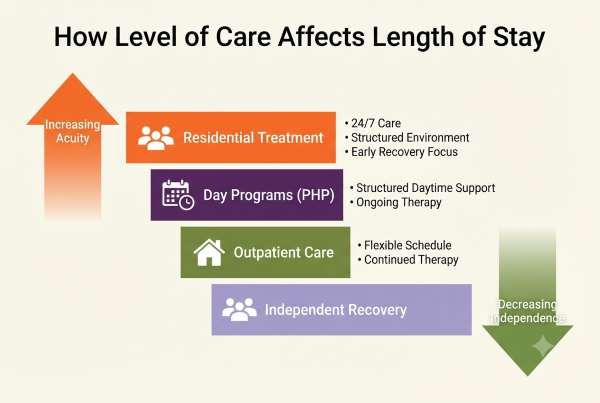
Inpatient treatment most commonly refers to an overnight stay in a hospital or treatment facility with a significant amount of support.
Residential Treatment is a combined treatment living and therapy practice where the person lives in a treatment facility and is served by structured therapy and recovery services.
Outpatient treatment is a type of treatment where a person can remain at their home and go to appointment times to handle treatment.
Inpatient care, as defined by SAMHSA, is treatment where you stay at a treatment facility overnight, and residential programs are facilities where you live at the treatment program for a length of weeks and/or months.
The plan of treatment may also change. An individual may enter into medical detox, residential treatment, intensive outpatient care and then regular outpatient therapy.
Treatment: How Long Is Rehab for Drug Addiction?
In most cases, individuals who ask “how long is rehab for drug addiction?” are thinking about the 30-day treatment program. One way, but certainly not the only one.
30-Day Rehab
The 30-day program offers a duration of structure for stabilization, therapy, education, and planning the road to recovery. For others, therefore, especially if clinical needs can be met within a shorter timeframe, it might make sense.
In fact, 30 calendar days is not always synonymous with “30 calendar days of treatment.”
60-Day Rehab
Because of the additional time, the 60-day program allows more time to address cravings, coping skills, relationships, behavioral patterns, and relapse-prevention strategies. May be beneficial for individuals who may require more support than a short-term program can offer.
90-Day Rehab
A 90-day program provides the individual with a much longer period of time to engage in therapy, practice recovery, develop supports, and plan a re-entry to normal daily life.
NIDA has indicated that for many individuals, a treatment session that lasts less than 90 days may be of limited effectiveness, and a longer length of treatment may be indicated where clinically appropriate.
Long-Term Treatment
Someone else may require prolonged treatment, which can take more than a few months to finish. This can sometimes be appropriate if your substance use is extensive, there are multiple relapses, or major medical, psychological, familial, or social concerns need to be addressed.
Detox Is Not the Same as Rehab
Detox is more about safely managing withdrawal and the subsequent body’s process of ridding itself of the substance. Rehabilitation will extend further to include the therapeutic element of behaviors, thoughts, triggers, relationships, coping skills, and relapse prevention.
Some individuals with severe substance use disorders follow a line of progression with SAMHSA that begins with medically managed withdrawal and progresses to residential rehab, intensive outpatient treatment, and/or continuing care.
What Happens During Rehab?
Treatment may include any (or a combination) of the following, depending on the program:
- Individual counseling
- Group therapy
- Family counseling
- Behavioral therapies
- Treatment of some substance abuse disorders.
- Relapse-prevention education
- Recovery planning
- Peer support
- Life-skills development
- Aftercare planning
For some substances and individuals, medications and counseling and behavioral therapies can offer a comprehensive approach to treating substance use disorders, according to SAMHSA.
Interested in help at this time? If you’re looking for rehab for drugs near me, your search ends here with Intervention 911; we are here to get you the right addiction treatment when you need it. Please call and speak with someone about your situation and find out if there might be options to treat it.
Why Treatment Length Matters
Anyone who has done any research will know that not everybody should be sent to rehab for the same length of time.
“NIDA explains that no “right time” exists for addiction treatment, and longer treatment is related to increased treatment success. Its guidance highlights that for many individuals, less than 90 days of treatment may not be as effective, and that more treatment may be recommended.
Recovery processes involve more than just the conclusion of the residential treatment program, says SAMHSA. Some individuals transition to less intense levels of care and rehab-support services and do so for a longer period of time.
This is why it’s usually not just about how long rehab for drugs lasts. But what level of treatment and support does this individual need to attain a stable recovery?
Side Effects and Challenges During Rehab
The recovery process of rehab can be a difficult one physically and emotionally, particularly in the initial part.
Each substance can cause cravings, sleep changes, fatigue, irritability, anxiety, mood changes, trouble concentrating, or other withdrawal symptoms.
Emotional discomfort may also happen when the individual starts to confront experiences, connections, or behaviors that were conversation topics they used to self-numb with by using drugs and alcohol.
What Should You Look for in Rehab?
Don’t just consider the number of days when looking for rehab for drug addiction. Look for medical supervision, qualified clinician(s), individual treatment plans, evidence-based care methods, dual diagnosis if necessary, family involvement, and aftercare plans.

Reducing the Risk of Relapse After Rehab
Don’t use the length of days as the only criterion for comparing rehab for drug addiction programs. Look for medical supervision, qualified staff, individualized treatment, evidence-based treatment, dual-diagnosis treatment (if necessary), family support, and a well-defined aftercare plan.
Knowing the answer to the question, “How long is rehab for drug addicts?” is just a part of making recovery plans. The post-treatment can be equally crucial.
Continue Treatment
Don’t believe that when you leave residential treatment you’re done with recovery. After rehab, some people can continue with the treatment or go to outpatient rehabilitation facilities to continually practice what they have learned during rehab.
Develop a ‘Support Network’.
Encouragement and accountability are possible with trusted family members, friends, counselors, peer-support groups, and recovery communities.
Identify Triggers
Identify certain people, places, feelings, or circumstances that can trigger feelings of wanting to use drugs. Development of a plan for dealing with those triggers can, therefore, lower the risk of a return to substance use.
Follow Medication Plans
Medications may play a significant part in the treatment of some substance use disorders. Follow the doctor’s orders on medication and follow up with the doctor routinely.
Create a Structured Routine
Good nutrition and sleep, exercise, meals on time, activities, and appointments can offer stability in the early recovery period.
Ask for Help Early
Using drugs again does not mean that the person has failed. It’s a cause to get in touch with the treatment team and reevaluate the recovery plan.
How Long Is Rehab for Drugs?
Therefore, what is the length of rehab for drugs? Others require just 30, 60, or 90 days of treatment or attend for extended periods of time. The appropriate dosage will vary based on individual substance use, health, mental health, support and treatment response.
There’s no trophy for finishing rehab the soonest. A successful treatment should allow duration of time for stabilization, understanding addiction, learning coping and practical life skills, as well as time to work through underlying issues and to prepare for what life will be like after treatment.
Before in-patient drug rehab, contact a reputable treatment professional and then select a program solely based on the number of days.
Get Help With Drug Addiction Today
Whether you or someone you know needs help with drug rehab, you’re not alone when you call Intervention 911 to help determine the available resources and appropriate treatment options. Call our team to find out more about the options for care and make the first step towards recovery!
Medical Disclaimer: This blog is for educational purposes only and is not a substitute for medical or mental health advice. Detox and withdrawal can be medically dangerous for some substances. A qualified healthcare professional should determine the safest level and length of treatment for each person.
Frequently Asked Questions
How long does a person stay in rehab for drugs?
A person may stay in rehab for 30, 60, or 90 days, although some people need several months or longer. Treatment length depends on addiction severity, substance used, health, mental health, previous treatment, and progress.
How long does rehab last on average?
Rehab commonly lasts about 30 to 90 days, but there is no universal average that applies to everyone. Some people need shorter care, while others benefit from extended residential treatment and ongoing outpatient recovery support.
What are the 5 stages of rehab?
Treatment is often described through stages such as assessment, detoxification or stabilization, active treatment, transition or step-down care, and continuing recovery support. Programs may organize these stages differently according to each person’s clinical needs.
How many days does rehab typically last?
Common rehab programs last approximately 30, 60, or 90 days. However, treatment may last several months or longer when someone has severe addiction, repeated relapse, co-occurring conditions, or an unstable recovery environment.
Can I use my phone in rehab?
Phone policies vary between rehab facilities. Some programs restrict phone access during the early stages to reduce distractions, while others allow scheduled use. Ask the facility about its communication rules before admission.
What are the 7 stages of addiction?
There is no universally accepted clinical model containing exactly seven stages. A commonly described progression includes experimentation, regular use, risky use, dependence, addiction, treatment, and recovery, although real experiences do not always follow this sequence.
How long is inpatient rehab for drugs?
Inpatient rehab can last a few days to several weeks, while residential programs may continue for several months. The appropriate length depends on withdrawal risks, addiction severity, medical needs, mental health, previous treatment, and recovery progress.
Can I find rehab for drugs near me?
Yes. Local treatment options may include detox centers, inpatient programs, residential facilities, intensive outpatient programs, and outpatient providers. A professional assessment can help determine which level of care is appropriate for your situation.
References and Content Sources
- American Addiction Centers, “How Long Is Rehab? Drug and Alcohol Rehab Lengths.” American Addiction Centers resource
- National Institute on Drug Abuse, Principles of Drug Addiction Treatment: A Research-Based Guide. NIDA treatment principles
- Substance Abuse and Mental Health Services Administration, Treatment Types for Mental Health, Drugs and Alcohol. SAMHSA treatment types
- Substance Abuse and Mental Health Services Administration, Treatment Options for Substance Use Disorder. SAMHSA treatment options
- Substance Abuse and Mental Health Services Administration, Find Substance Use Disorder Treatment. SAMHSA FindTreatment.gov resources
Sorry, the comment form is closed at this time.