
26 Sep Substance Abuse Statistics in 2026: What the Numbers Show
Approximately 15 of every 100 Americans age 12 and older today suffer from an alcohol, drug, or alcohol and drug addiction. Rates have decreased since 2021 and overdose deaths continue to decline. Despite this, only a few people receive treatment, typically because they think they can cope on their own or aren’t prepared to stop.
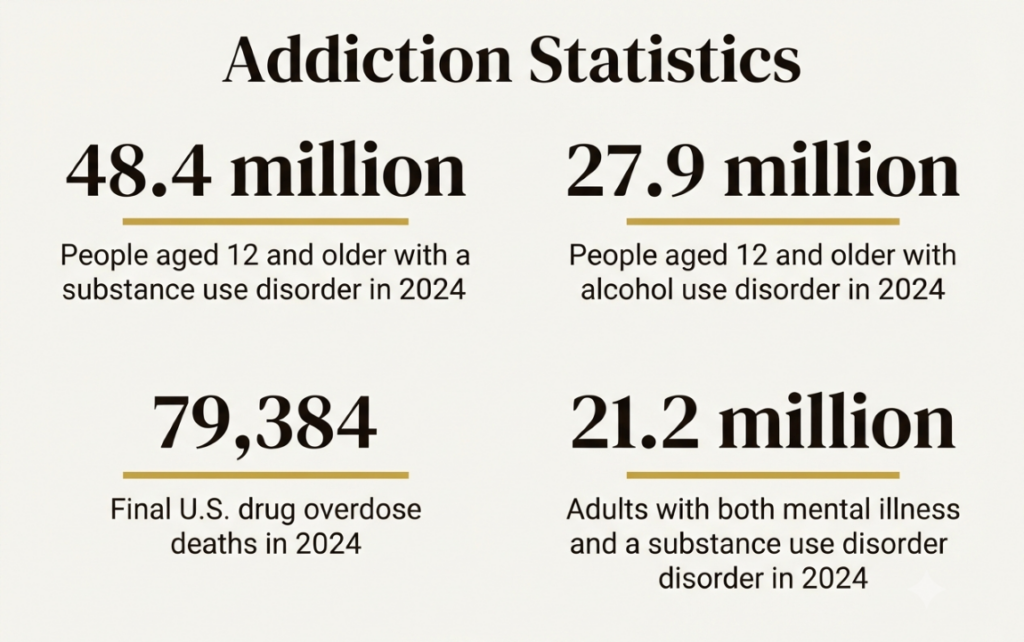
The newest substance abuse statistics show that 44.6 million Americans aged 12 and older had a substance use disorder in 2025. That represents 15.3% of the population, as compared to 16.8% one year ago. Nevertheless, only approximately 1 in 6 people who required treatment actually received treatment.
Numbers like these can seem remote until one of them is in your home. When many of those 44.6 million are loved ones, the numbers belong to them.
The situation, fortunately, is starting to improve. But the majority of people who are addicted don’t seek help themselves, and that’s where families can really help the most.
Worried the numbers describe someone at home? Intervention 911 can talk through your options confidentially at (866) 888-4911.
How Many Americans Have a Substance Use Disorder in 2026?
In 2025, 44.6 million people aged 12 or older had a substance use disorder (SUD). This included 25.7 million with alcohol use disorder and 26 million with a drug use disorder. About 7.1 million people struggled with both. These are the most current national substance abuse statistics available in 2026.
A substance use disorder is a medical condition. Alcohol or drug use keeps causing problems, like health issues or failed attempts to cut back. Doctors diagnose it using 11 criteria from the DSM-5.
Source: SAMHSA 2025 National Survey on Drug Use and Health
Mild does not mean harmless. It is often the best time to act, before tolerance and health damage build up.
Spotting early warning signs in a family member? Intervention 911 explains practical next steps at (866) 888-4911.
What Substances Do Americans Use Most Right Now?
Alcohol remains the most widely used substance in America by a wide margin. In 2025, 129.1 million people drank in the past month. Marijuana led illicit drug use, with 61.6 million past-year users. Prescription opioid misuse, hallucinogens, and cocaine followed well behind.
Binge drinking means four or more drinks for women, or five or more for men, on one occasion. Nearly 44% of current drinkers binged in the past month.
SAMHSA research insight: In 2025, alcohol drew about 11,800 first-time users every day in the United States, more than any other substance, according to SAMHSA’s analysis of the 2025 NSDUH.
Expert Advice: Arrange a treatment program before an intervention so acceptance becomes immediate admission.
Are Substance Abuse Rates Going Up or Down?
Most substance abuse rates are going down. Alcohol use, binge drinking, opioid misuse, and overall SUD rates all declined between 2021 and 2025. SAMHSA estimates 4 million fewer people had alcohol use disorder in 2025 than in 2021. Marijuana and hallucinogen use among
Which Age Groups Face the Highest Substance Use Risk?
Young adults aged 18 to 25 show the highest rates of illicit drug use and binge drinking. In 2025, 36.3% used an illicit drug in the past year. Adults 26 and older had the most alcohol users overall. Teens aged 12 to 17 had the lowest rates, and those rates keep dropping.
Teen illicit drug use fell from 14.6% in 2021 to 11.2% in 2025. Still, about 7 in 10 people who first tried alcohol in 2025 were under 21.
Early use shapes the developing brain, so families should not wait for a crisis. Intervention 911 offers dedicated young adult interventions built for this age group.
Fact: Only about 1 in 6 Americans needing substance use treatment received it.
How Many People Die From Drug Overdoses Today?
Overdose deaths are falling but remain high. The CDC predicts 67,798 drug overdose deaths in the 12 months ending March 2026. That is a 12.3% drop from the year before. Deaths peaked at nearly 108,000 in 2022, so progress is real but incomplete.
Fentanyl still drives much of the danger. In 2023, about 69% of overdose deaths involved synthetic opioids, mainly illegally made fentanyl, according to the CDC. Many people who take fentanyl do not know it is in their drugs.
Based on CDC provisional data, even after a 12.3% decline, the latest count still works out to roughly 186 overdose deaths every day nationwide.
Why Do Most People Skip Substance Abuse Treatment?
Most people skip treatment because they believe they can control their use alone. In 2025, 82.5% of adults with an SUD who saw a need for treatment gave that reason. Others said they were not ready to stop, lacked time, or feared what people would think.
This is where denial becomes a medical barrier. Addiction changes brain areas that control judgment, so the person struggling is often the last to see it.
NIDA treatment principle: Research shows treatment does not need to be voluntary to be effective. Pressure from family, employers, or courts can raise entry, retention, and success rates, according to the National Institute on Drug Abuse.

What Do Substance Abuse Statistics Mean for Families?
These substance abuse statistics show that families hold real power. Most people with addiction will not seek help unprompted, yet treatment works even when someone starts reluctantly. A structured, loving intervention can turn a “no” into a treatment admission, and early action often prevents a crisis.
Here are practical steps families can take today:
- Write down what you see. Note specific behaviors and dates, not labels.
- Learn the warning signs. Review common signs of drug abuse.
- Stop covering for the problem. Excuses and paid debts delay change.
- Get professional guidance. An interventionist helps plan what to say.
- Line up treatment first. Have a program ready before the conversation.
From our clinical team at Intervention 911: The families who see the best outcomes prepare treatment options before the conversation, so a “yes” can turn into admission the same day.
Planning an intervention but unsure where to start? Intervention 911 walks families through each step at (866) 888-4911.
Beyond Substance Abuse Statistics: How Intervention 911 Helps
Intervention 911 exists to close the treatment gap these numbers reveal. Founded in 2002 by interventionist Ken Seeley, our team helps families move a loved one from resistance to care. Intervention 911 holds The Joint Commission’s Gold Seal of Approval for Behavioral Health Care Accreditation.
We provide professionally guided substance abuse interventions nationwide, with specialized plans for drug addiction, alcohol addiction, and dual diagnosis cases. Families learn what to expect during an intervention well ahead of time.
Support does not stop at admission. Our recovery advocacy and case management and our 5-year recovery plan help protect progress after treatment ends.
Call Intervention 911 at (866) 888-4911 or visit our contact page to speak confidentially with our team. You can also verify your insurance before you call.
Frequently Asked Questions
How many people in the U.S. have a substance use disorder in 2026?
The latest federal data, covering 2025, shows that 44.6 million Americans aged 12 and older had a substance use disorder in the past year. That represents 15.3% of this population. The data was released by the Substance Abuse and Mental Health Services Administration in July 2026.
What is the most abused substance in America?
Alcohol is the most widely used substance in the United States. In 2025, 129.1 million people aged 12 and older reported drinking alcohol during the past month. Among illicit drugs, marijuana was the most commonly used, with 61.6 million people reporting past-year use.
Is substance abuse increasing or decreasing?
Recent federal data shows that several major substance-use measures have declined, although trends vary by substance and age group. Overall, past-year substance use disorder decreased from 16.7% in 2021 to 15.3% in 2025. Marijuana and hallucinogen use increased over this period, while several other measures decreased or remained stable.
How many people with addiction get treatment?
In 2025, about 7.6 million people aged 12 and older were classified as needing substance use treatment, and 16% received care. Among people who actually had a substance use disorder, 4.9 million, or 11%, received treatment. Common reasons for not receiving care included believing they could manage independently.
How many overdose deaths happen each year now?
The latest CDC provisional data estimates 67,798 drug overdose deaths occurred during the 12 months ending March 2026. This represents a 12.3% decrease from the previous year. Although overdose deaths have declined nationally, the number remains substantial, and illicitly manufactured fentanyl continues to be a major contributor.
Which age group has the highest rate of drug use?
Young adults aged 18 to 25 reported the highest rate of past-year illicit drug use in 2025. About 36.3% of people in this age group used an illicit drug during the previous year. They also had the highest rate of past-month binge drinking, at 26.7%.
How common is it to have both alcohol and drug addiction?
Having both alcohol and drug use disorders is relatively common among people with substance use disorders. In 2025, approximately 7.1 million Americans aged 12 and older had both an alcohol use disorder and a drug use disorder during the past year, representing about 16% of people with a substance use disorder.
What percentage of people relapse after addiction treatment?
NIDA has historically cited relapse rates of roughly 40% to 60% for substance use disorders, while emphasizing that relapse can occur as part of recovery from a chronic condition. A return to substance use does not mean treatment has failed; it may indicate that treatment needs adjustment or additional support.
Does treatment work if someone is forced into it?
Treatment does not necessarily have to be voluntary to be effective. NIDA notes that legal, family, workplace, or other external pressures can increase treatment entry and retention and may contribute to successful outcomes. However, treatment should still address the person’s needs, circumstances, motivation, and ongoing recovery goals.
Can an intervention help someone who denies having a problem?
An intervention can help families communicate concerns and encourage someone to consider treatment, even when that person does not recognize the severity of their substance use. Professional guidance can help families plan the conversation, avoid unnecessary confrontation, and identify appropriate treatment options if the person becomes willing to accept help.
References
- https://www.samhsa.gov/data/sites/default/files/reports/rpt57150/2025-nsduh-annual-national-report.pdf
- https://www.samhsa.gov/newsroom/press-announcements/20260727/samhsa-releases-annual-national-survey-on-drug-use-and-health
- https://www.samhsa.gov/blog/release-2025-nsduh-using-data-to-drive-great-american-recovery
- https://www.samhsa.gov/data/data-we-collect/nsduh-national-survey-drug-use-and-health/national-releases/2025
- https://www.cdc.gov/media/releases/2026/cdc-launches-new-overdose-prevention-data-channel.html
- https://www.cdc.gov/overdose-prevention/about/index.html
- https://nida.nih.gov/publications/principles-drug-addiction-treatment-research-based-guide-third-edition
- https://nida.nih.gov/publications/drugs-brains-behavior-science-addiction/treatment-recovery
- https://www.ncbi.nlm.nih.gov/pmc/articles/PMC11793833/
- https://intervention911.com/
This article is for informational purposes only and should not replace professional medical advice, diagnosis, or treatment. If you or someone you know is struggling with substance use, contact Intervention 911 or visit Intervention 911 to learn about available treatment options.
Sorry, the comment form is closed at this time.